
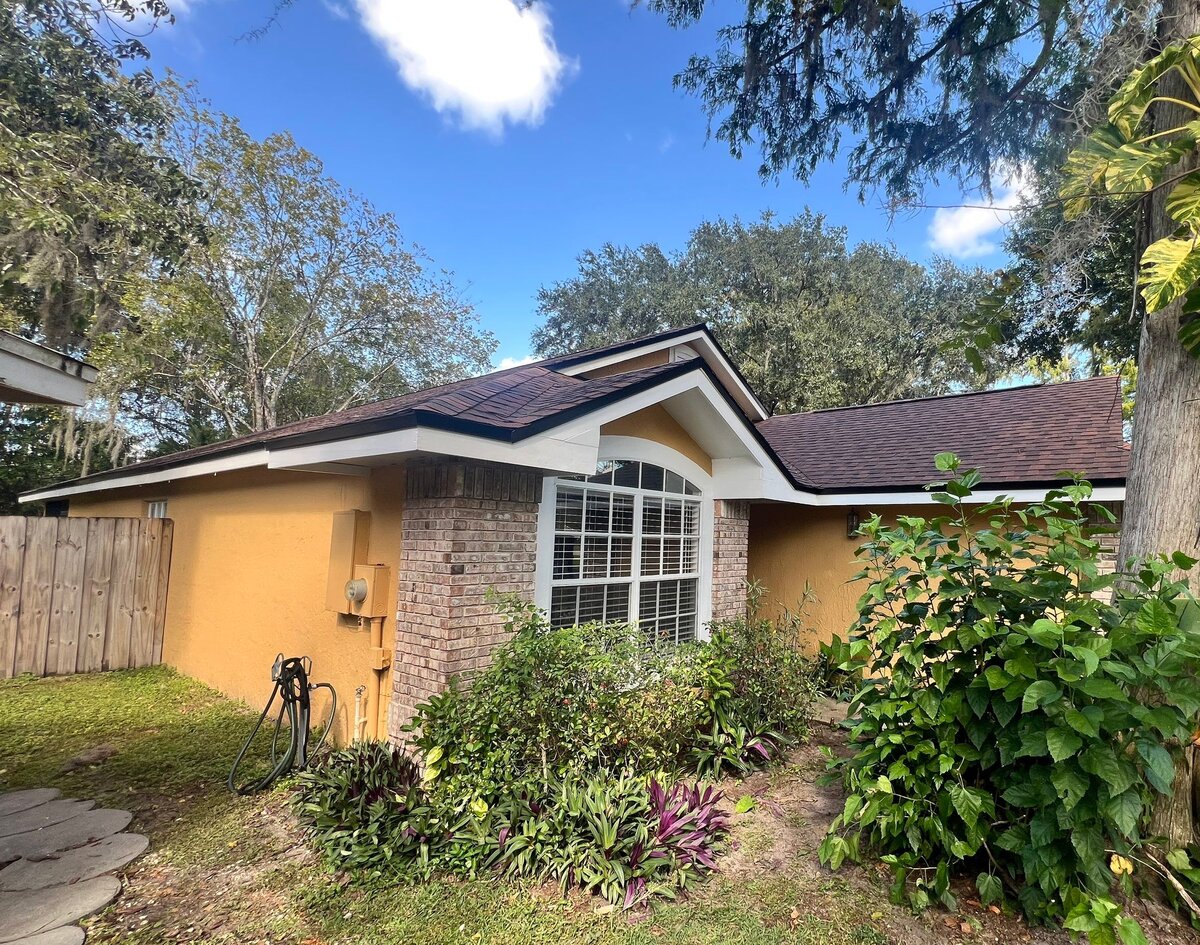





Give your Central Florida home a short, ground-level check when you return for the season. Look for changes outside, walk through the rooms before filling them with luggage, and compare what you see with your departure photos. You are looking for conditions that need attention before daily routines hide them again.
A clean driveway and a dry living room can make the house feel ready. They tell you little about a back bedroom that stayed closed or a roof corner you cannot see from the street. Start with the parts of the house you can safely observe, then arrange professional help for anything unexplained.
Leave room for a first look
If possible, arrive with enough daylight to walk the property. Keep your phone available for photos and leave the moving boxes in one accessible place while you check the rooms. You do not need a formal inspection kit or a trip into the attic.
Pull up the last photos you took before leaving. A picture of the rear roofline or an ordinary bedroom ceiling may be more useful now than the date of your last maintenance visit. If someone watched the house, ask which rooms they checked and whether they noticed a change.
Separate firsthand information from assumptions. Record "neighbor noticed debris by the garage in September" as reported information. Record "small pieces are still on the ground today" as your own observation. Ask the roofer to identify the pieces before deciding where they came from.
Walk the outside before moving patio furniture
Use familiar, stable walking surfaces and look toward the roof from several directions. TAMKO's homeowner inspection guidance recommends checking from the ground and leaving roof access to a professional.
Look for visible changes in the outline of the roof, materials on the ground, a gutter that appears displaced, or staining below a roof edge. Photograph anything you cannot identify. A wide photo showing the side of the house helps a roofer understand where a close-up belongs.
Do not pull on loose pieces, reach overhead to test a gutter, or move beneath something that appears unstable. Keep people away from that area and report it when arranging help. You can finish the rest of the walk without getting a better angle.
Pay attention to the patio and side yard as well as the front entrance. Furniture or stored items may conceal a mark on a wall. Take a photo before rearranging the space, then note what the item had been covering. If the area is inaccessible, put it on the inspection request instead of forcing access.
Check the quiet rooms while they are still empty
Walk through closets, guest rooms, the laundry area, and other spaces that may have had little attention while you were away. Look at ceilings and wall corners in normal light. Note unfamiliar odors, discoloration, peeling finishes, or an area that appears damp.
Describe what you find without naming its cause. "Brown mark above the guest-room window" is useful. "Roof failed above the window" is a conclusion that still needs investigation. The EPA explains that household moisture can come from several sources, including outside leaks and activities inside the house.
Keep luggage and clean bedding away from a damp or unexplained area while you arrange an assessment. Avoid opening a ceiling or disturbing stained materials to see what is behind them. You can document a room from the doorway and let the appropriate professional decide how to examine concealed spaces.
If you find active water near electrical equipment, stay clear and seek appropriate emergency help. A room that appears unsafe can wait; your return-home checklist cannot make that space safe to enter.
Compare dates before drawing a conclusion
An old stain may still be visible even if a repair was completed. A newly noticed stain may have appeared at any point during your absence. "First seen today" is often the only date you can honestly provide.
Review work completed while you were gone. Match each invoice or message to a location. Did the contractor repair the back porch connection, the main roof, or a gutter? A broad label such as "roof work" can blur several different jobs.
Suppose you return to a mark in a bedroom and find a summer invoice for work above the garage. Give the roofer both records and ask whether the bedroom was included in the earlier assessment. Identifying the two locations keeps the conversation focused on the area that now needs attention.
Make one return-home note
A short note can keep the first day from becoming a series of disconnected calls. Use the following format for each concern:
- Location: the room and the closest exterior side of the house.
- Observation: what you saw, heard, or smelled, without a diagnosis.
- Date: when you first noticed it and when you last know the area looked different.
- Evidence: one wide photo, one closer photo, and any relevant older image.
- Earlier work: contractor, date, and the specific area described in the paperwork.
- Access: pets, locked gates, or rooms that need advance coordination.
Keep this note with the photos rather than sending unlabeled images in several texts. If another household member makes the appointment, they will have the same information you do.
Ask the person taking the appointment whether the situation needs faster attention, what can be safely left in place, and whether another trade may need to be involved. Describe active leaking separately from a dry, unchanged mark.
Settle in after assigning the open items
You may finish the first walk with no concerns. Save a few dated overview photos anyway; they give you a clear starting point for this stay. If something needs attention, put the appointment and the person responsible in your calendar before the week fills up.
For a visible roof change, unexplained ceiling mark, or question about earlier roofing work, request a roof assessment from Pinnacle Roofing Group. Include your return-home note so the visit can focus on the locations and changes you found.
Related reading: Reading an estimate · Pricing and options · Roof replacement